Gulliver’s Travels: Part 4

Image result for gulliver and the Houyhnhnm

After spending five months home, Gulliver ventures out once again leaving his pregnant wife behind. When Gulliver sets sail on the Adventurer as the captain and his first crew falls ill, he is held captive in his own cabin. After the crew puts Gulliver in a boat, he floats up to an island with human-like creatures that act like wild animals who are referred to as Yahoos. When the Yahoo’s approached Gulliver in a way that could only be described as threatening, two horses came to his rescue neighing the enemies away. We then come to find out that the horses of the island are the Houyhnhnm, whom in which are the governors of the island. The Houyhnhnm are unsure of Gulliver because he has the shape of a Yahoo but wears clothes, doesn’t eat raw meat, and is repulsed by the rampant creatures with sharp nails. Gulliver tries to prove he is different from the Yahoos in many ways; for instance, he spends a lot of time with the master horse answering any of his questions. Unfortunately, this wasn’t enough. Gulliver is sent away by the Houyhnhnm who feared that Gulliver might become influential to the Yahoos and urge them to kill their cattle. When Gulliver was grudgingly saved by a boat he was trying to avoid, he was sent back home to his wife and kids who he could hardly stand because he compared them to the Yahoos. But eventually, Gulliver settled back in and looked at his life and country from a new aspect that then inspired him to share his experiences with the town.

In Part Four of Swift’s book, we can see that he is clearly satirizing the Yahoos with humankind. His distaste for humanity is shown throughout the characters in this part. For example, when Gulliver tells the master horse of their laws, governing, art, and war, the horse can see that he is much different from the Yahoos in his land, but the natures of the two creatures are no different. Gulliver’s infatuation with the Houyhnhnm is Swift’s hopes for mankind; being honest, beautiful, humble, brave, and sincere. Swift created a society within his book that reflects the corruption of Europe.

Gulliver’s Travels: Part III

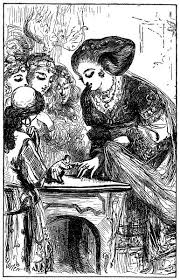
Gulliver sets out on yet another voyage assisting as the surgeon. When their ship gets seized by pirates, he is forced to survive in a canoe, stranded at sea with very little food and water that won’t last him over four days. As Gulliver journeys the seas, he comes across an island floating in the sky. This island is home to people with such a unique culture; meaning most of their ideas and thoughts came from mathematics, art, and music. Gulliver found this island to be dull and ordinary, so he then left for Legado where he would witness professors doing odd experiments in an academy. After his time spent here, he made a few more stops before he finally ended up at Glubbdubdrib. Here, he visited the governor who was well-known for calling on any spirits; therefore, Gulliver used his special abilities to reveal the truth about people from his past. After much exploration and wandering, Gulliver then went home to be with his family once again.

In Part 3, Swift builds up his political satire within the academic field. He uses the impractical studies the professors were experimenting with to satirize the Enlightenment era. Gulliver watches the scientists try to extract sunbeams from cucumbers, turn excrement back to food, and turn ice into gunpowder. As we read, we realize that their experiments will not amount to anything, much like England’s attempts to better their country during this time. Another satirical development is the floating island. This is used in a way to promote the government over the people it governs. For instance, the king sometimes has the people lick the poison coated floor as they approach him to rid opponents living in the kingdom. Because the king puts himself over the people, we might be led to believe that Swift may have also been trying to say that the Greek and Romans were always held highly, seen as truly virtuous, compared to the Europeans who might have been considered degenerate.

Gulliver’s Travels: Part II

Because Gulliver was charged with treason and forced to leave the Lilliputians, he ends up in Brobdingnag, a land of giants. When he first arrives, he is taken in by a farmer who supplies him with a bed, food, and water. Once he was settled, the farmer displayed Gulliver doing tricks all over town in order to make a profit off of him. When Gulliver started to decline in health from exhaustion, he was sold to the royals for 1,000 gold pieces. Although he was happy for a while, his size caused many accidents and he began to feel homesick. After the box he was living in was carried off by an eagle and dropped into the ocean, he ended up in the hands of Englishmen who took him home.

In Part II of Gulliver’s Travels, Swift uses the conversations between the king and Gulliver to satirize the pointless use of modern warfare. When Gulliver hopes to impress the king by giving in-depth details of the English army and their warfare, the king was baffled as to why they’d cause bloodshed when they are already a free country living in peace. We see more satirical elements when Gulliver examines the Maids of Honor. He finds their bodies horrific and disgusting but only because he is seeing their flaws much closer than he would the women back home. This puts an emphasis on the English society during the 18th century expressing that everyone suffers the same flaws and are not as perfect as what they appear to be.

Swift’s Satire in Gulliver’s Travels: Part 1

Jonathan Swift's Gulliver's Travels

A lone intellectual man, who washes up on an island known as Lilliput due to a tragic shipwreck, has awakened to find himself surrounded by tiny people bound by ropes and targeted with arrows. When the Lilliputians relinquish their hostility towards the man, they bring him to their city where he will be given a bed, food, drinks, entertainment provided by the emperor, and a chance to earn his freedom. The man then travels on to Mildendo where he will learn of the two factions and the posing threat of war with the Blefuscus. With this information, he returns back to the Lilliputians where he will become more acquainted with their customs and will save one’s life from a fire by fighting it with his urine. But when a court official shows up to charge the man with treason by opposing forces in the government, he comes face-to-face with the possibility of execution.

Swift continues to use political satire by comparing the Lilliputians ridiculous customs to Europe’s bewildering practices they used. The man never criticizes the Lilliputians or judges them on their size. He observes that some of their traditions are impractical, but he remains patient enough to learn more about them and its relevance that make their society function in a way that makes sense to them. For instance, the fact that members of the community have to literally rope dance to withhold a powerful position is absolutely absurd; but Swift insinuates that Europe ranked their political leaders judging by their skill and use of their hands and mind at the given task. It could be that Swift was on to something when he chose to create two factions separated solely by the heels of their feet. Maybe that was his way of telling us that there is no right or wrong way to believe. Or maybe he was hinting that we shouldn’t be concerned about the practices of others and what anyone else is doing because if it works for them, it shouldn’t matter to us.

The Troubles of Traveling With Gulliver: Chapter 1

Image result for tiny people in gulliver's travels

In the beginning, we are introduced to an intelligent man who studies mathematics, physics, navigation, and works as an apprentice, surgeon, and sailor. We can tell that he is a man with high standards and never settles; also, he has good morals as he works for everything he has rather than stealing and lying like others might have. Unfortunately, during the storm while at sea, the man becomes the waves’ prisoner and wakes up to find himself bound with ropes in a place called Lilliput. To further his confusion, human-like figures shorter than 6 inches begin to crawl on him. Furthermore, we see where the man has the choice of physically breaking free or hearing the Lilliputians out. When he makes the decision to negotiate with reason rather than getting shot with arrows, the Lilliputians return his kindness as well. This is when we get the idea that the physical approach isn’t always the best option; sometimes, the best thing to do is revert back to good morals and see if your generosity is returned. Because we are only given the man’s point of view, we know that he thinks these tiny people are abnormally small, but to the tiny people, he is strangely large and they are the normal ones.

I think Swift uses satire to write this story to ridicule London and it’s political standings in 1726. He makes a point to show how small minded people are and how quick they are to judge. The man was so fast to judge the Lilliputians, he got himself wounded because his first instinct was to break free and get away. But we also see the Lilliputians being judgmental the minute we become aware that they tied the man up and held him against his own free-will. This story is almost a mirror image of London and the conditions they were in.

A Modest Proposal That Lacks Modesty

The “Modest Proposal” was anything but modest if you were mislead just as I was. After just simply reading the passage looking no deeper than the words on the page, I was under the impression that cannibalism would be the key to survival. After reading this, I was disgusted and repulsed on the proposal alone. How could any human take life from innocent children for money, bargains, and food? This passage was all too disturbing. https://andromeda.rutgers.edu/~jlynch/Texts/modest.html

Image result for a modest proposal